
Khojasteh & the Parrot
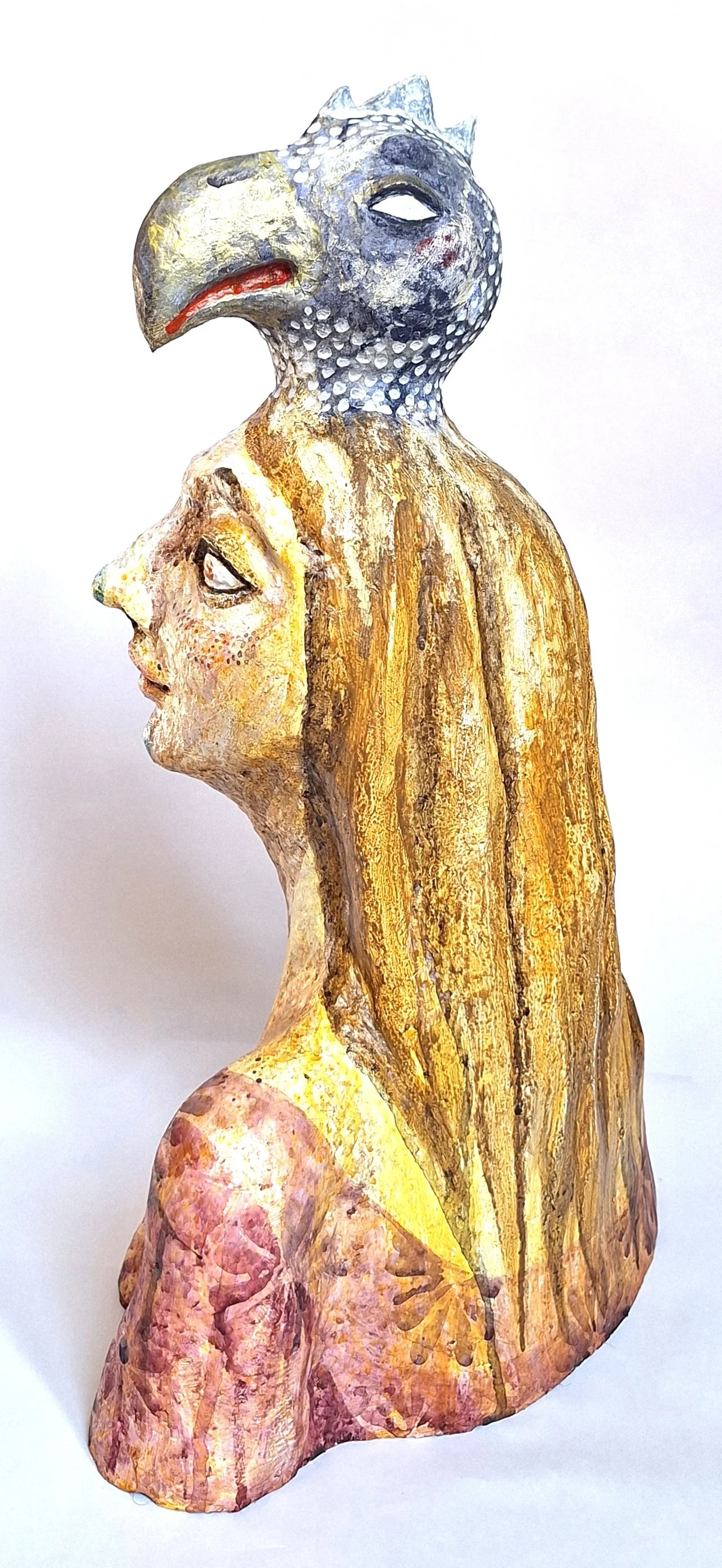
Acrylic on papier-mâché, 18 x 29 x 44 cm, 200 USD
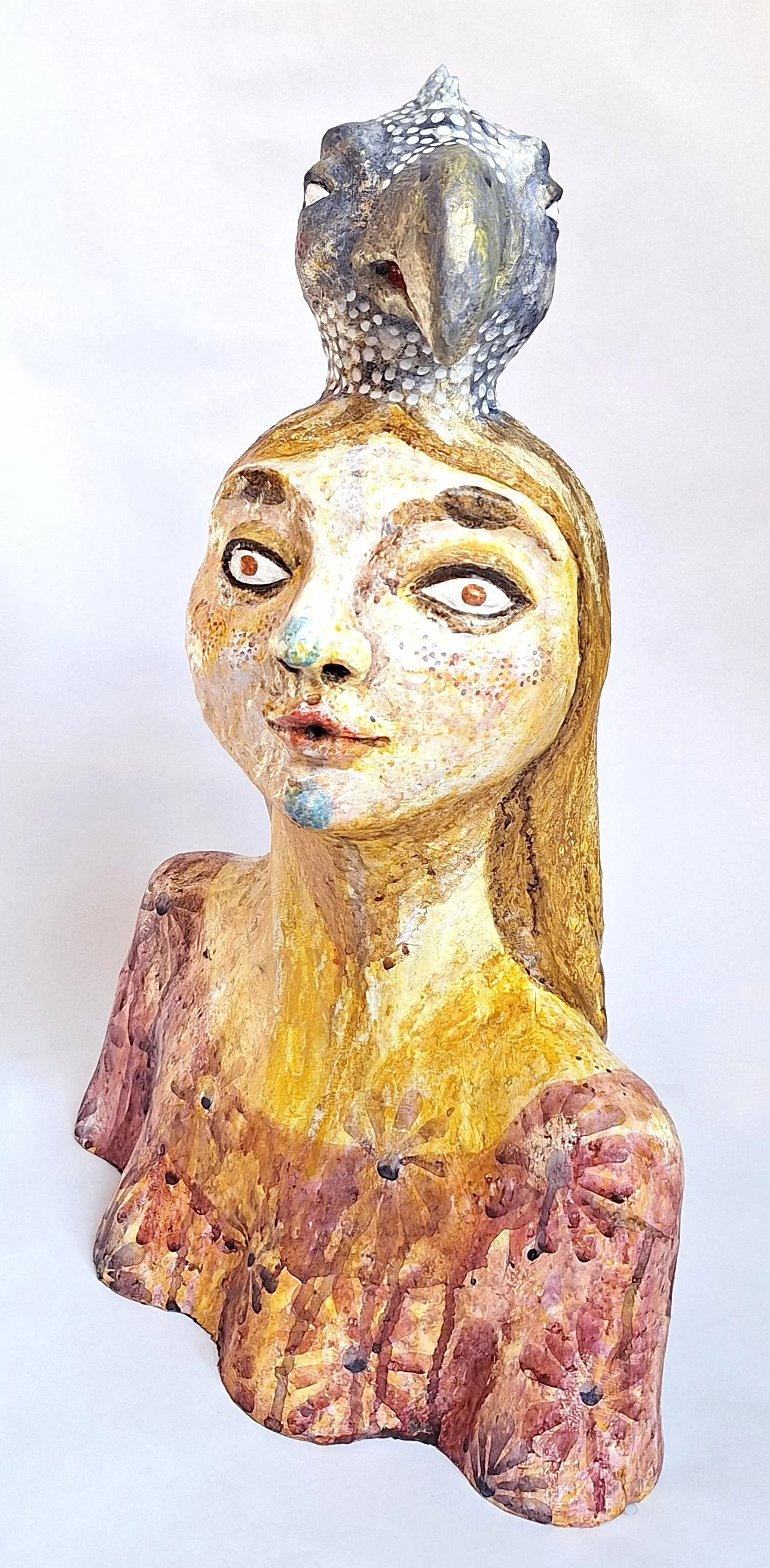
Khojasteh & the Parrot (alternative view)
I chose this story because of its emphasis on the importance of loyalty, commitment, and trust—as new forms of virtual communication expose us to emotional and ethical challenges every day.
Sources
This work draws inspiration from two literary sources: Abdol-Latif Tasuji’s edition of One Thousand and One Nights (The Arabian Nights, 1843–1844 CE), and Tuti-nama (The Parrot Book). The latter was adapted from Sanskrit into Persian by Ziya’al-Din Nakhshabi, a 14th-century Persian Sufi saint. In both, the central frame story involves someone restraining the wrong actions of another through allegorical, symbolic, and indirect forms of expression—reflecting the rich traditions of Eastern storytelling.
My telling of the story
Khojasteh, wife of the merchant Maymun, considers meeting her lover while her husband is away. She confides this to her parrot, who rather than directly admonishing her, seeks to deter her with a subtle and ingenious strategy.
At night the parrot begins a captivating story, but abruptly stops at its most suspenseful point. He tells Khojasteh that she may leave if she wishes, but if she does, her fate will resemble that of the story’s character. Intrigued and unable to resist hearing the story’s conclusion, Khojasteh stays home. This pattern continues for 52 consecutive nights.
The parrot’s tales are morally instructive, exploring loyalty, the consequences of betrayal, deception and cunning, and the importance of wisdom and restraint. In the end, when her husband Maymun returns, Khojasteh has come to recognize the error of her intentions, and is guided back toward the proper path.
Takeaways
One should think carefully before acting.
Kind words and wise counsel prevent serious mistakes.